“If you obsess over whether you are making the right decision, you are basically assuming that the universe will reward you for one thing and punish you for another.”
― Deepak Chopra
A brief skim through this Journal
Throughout my life, I’ve always had a complicated relationship with mathematics and this was amplified during my life in Junior College 1. I’m going to take you on my adventure starting from 22 July 2019 up until today, 8 May 2020. Below is the timeline of events:
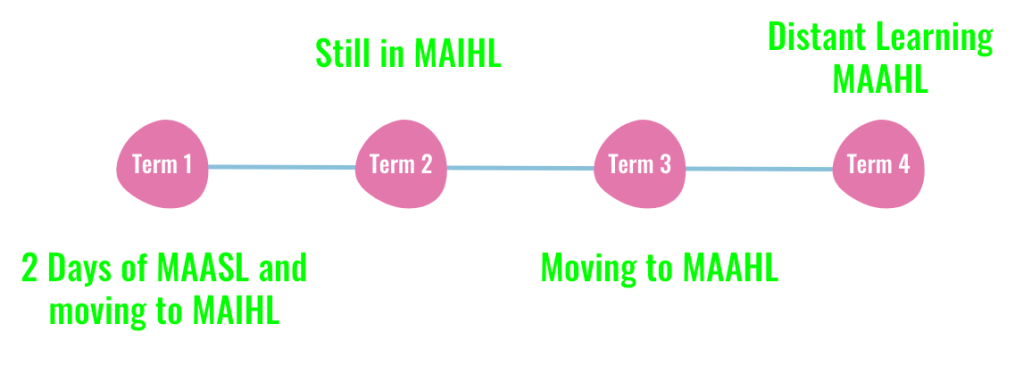
Storytelling time~
Term 1
The announcement for the new math syllable (MAISL,MAASL, MAIHL, MAAHL), plus the schools decision not to let Indonesians take Indonesian B messed up my subject selections. Since I didn’t take additional maths, and was advised not to take MAISL, I concluded that my only options were either MAASL or MAIHL.
I had a backup plan of taking a business major incase I didn’t get accepted into medicine, which made me ultimately decide to take Economics HL and MAASL. I sat in the MAASL for two days and then found out that math HL is preferred for medical applications! There goes my first switch~ (Economics HL to SL; MAASL to MAIHL)
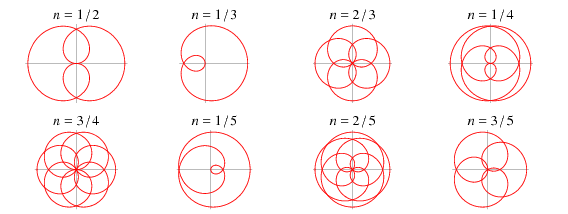
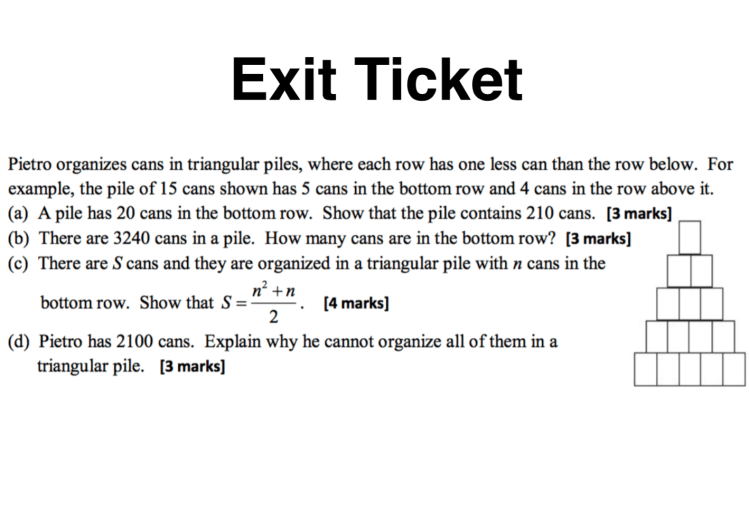
I was in MAIHL together with Alysha and it was really fun. Most of the days, we skimmed through powerpoint presentations and finish the class with a “Problem of the Day (POD)”. We also had exit tickets, which were questions needed to be answered if you wanted to leave the class. An interesting thing we did when learning complex numbers was plotting a rose curve in our GDCs (Mine was wiped out during SA1, but here’s a picture taken from https://mathworld.wolfram.com/Rose.html):
Term 2 (This is a long one)
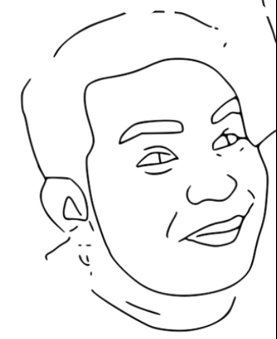
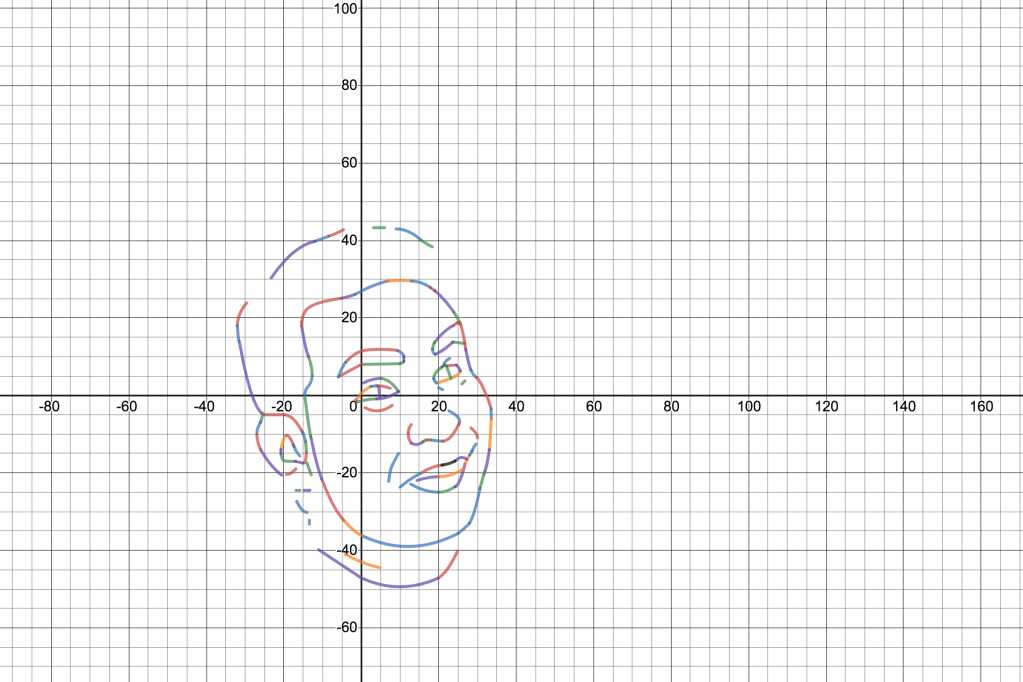
Manual calculations were not emphasised, instead, we were taught how to use our GDCs to its maximum capability – especially when learning functions. Alysha and I plotted a bicycle together (again… it was deleted for the SA1), and we also had to plot any image that we wanted on either GDC or Desmos for our semester assignment. I plotted Mr Rodel’s face wkwkwkwk. I used an application to trace the outline. then manually adjusted functions to fit the outline. I’m really proud of it to be honest.
Unfortunately, most of the students in the class including myself struggled doing the tests as we were too depended on the calculator and unfamiliar with the manual calculations. In one of the chapter tests, Alysha suddenly had a nose bleed after realising she couldn’t answer questions 1, 2, and 3 (sorry for exposing you Aly 🤭). I didn’t know that people could get nose bleed from stress XD. Alysha moved to MAASL after that.

As the SA began to approach, I wondered what I learnt in functions as we only did the Desmos task for it. GDC was a life saviour actually, since I could find everything I needed from it. I mostly studied the theory myself or in my lesson.
One thing that really hit me was when we were told to solve for the square of complex numbers without given a formula. I tried to solve it using some kind of sample from a website. :’)
At that point, I was really stressed out. My stomach acid became out of control and I was at a pretty low point. Then one day, after asking help and ranting to about my struggles in that class, Drel said:
“Why don’t you move to my class?”
I thought she was mental.

I have never been a math genius and most importantly, I didn’t take additional maths in IGCSE. She then mentioned how the topics we learnt were exactly the same. I started questioning the difficulty level of MAIHL and wondered if it also needed additional maths. At that point, I considered moving. I also borrowed Anushka’s notes and photocopied it for SA1 and sir, let me tell you this since I know you will be reading: Your notes saved my pitiful ass. Yes I was particularly enlightened by the functions part. ;D
2 weeks before SA1, I couldn’t make up my mind. To move or not to move? If I move, will I fail? If I don’t move, what will happen? Can I manage studying whatever I missed? What will Mr Rodel say when he finds out I’m moving up a level? (most people moved downwards) Will Mr Kichan even accept me in his class? Am I biting more than I can chew? These thoughts kept me wide awake at night.
In the end, I asked my mom. I consider her my main support, then my dad, and then Drel (Drel will get cocky if she reads this but she doesn’t read muehehehhe). What my mom said to me was the last push I needed to finalise my decision. She said:
“Isn’t it better to give this class a shot even though you don’t know the outcome, rather than staying in a class where you are sure that you’ll not do well in?”
I finished my SA1 with an okay score and moved to MAAHL the next term!
Term 3
During the term break, I went to my maths lesson to catch up with Add maths topic that I haven’t studied. He was also quite shock to hear me moving up the level heheheh.
I moved into MAAHL with doubts, but Mr Kichan and everyone else were really welcoming, helping me adjust to the new class. I asked a lot of help from Drel too.
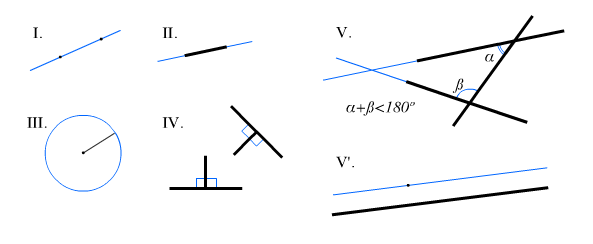
We started learning about Euclid’s postulates and also TOK. (You can read my e-journal #4 on this) I was really confused at that time and I thought whether I moved to the right class.
“Drel… Is the class normally like this?”
Thank god Drel was like naahh – and she said she was also confused HAHAHAAH. Anyway, I actually learnt that mathematical concepts could be untrue for certain circumstances (something I didn’t know was possible, since maths is perceived as unbiased).
After that we began learning vector, which was like a normal maths class. It was interesting and I really liked Mr Kichan’s teaching style. It was a combination of learning the formulas and theory with explorations.
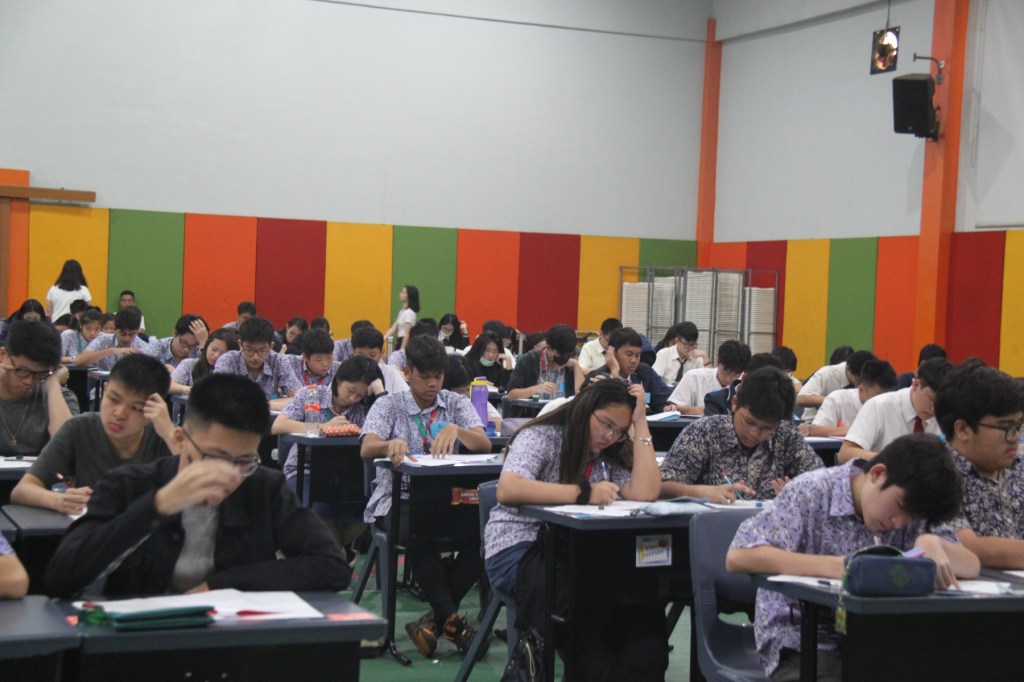
Amazing tests, amazing quizes, and unit tests were like a mental shock to me – especially 4 of them (?) happened within 2 weeks. Fortunately, I was able to get through it just okay~ (I think).
One of the most interesting events happened in this term and it’s the math event SISMO. I wasn’t able to engage as much as I hoped, but it was memorable nonetheless. You can read my e-journal #5 for the details ehehe~
Term 4
This term was unusual. The pandemic meant that we were all self isolated at home and had to resort to online learning.

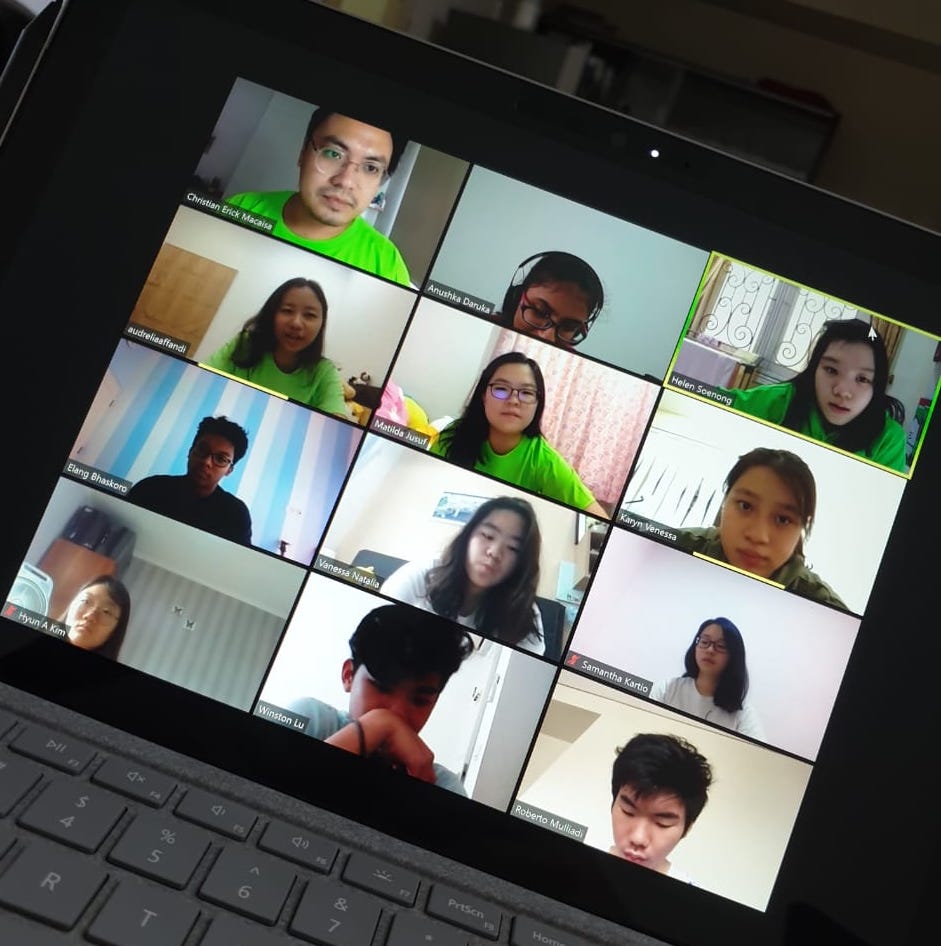
We did a “not-so-mini ” IA on statistics, sampling Kognity university students XD and also another IA for our chapter test. I think it was a really good idea to approach statistics this way as it made it more enjoyable to learn.
This term went by really fast and in a blink of an eye, it has ended. The mocks yesterday made me feel good about myself, but the exam just now… mau nangis :’)
Overall, I’m glad that I made the decision to move class.
Now I have a new fam: MAAHL FAM!!! 💚

💚💚💚
I think I ranted way too much… pengen curhat cause I’m in the middle of SA2 and my right brain is kind of screaming.
TOK
Q: Is mathematics invented or discovered?
Mathematics can be defined as: “The abstract science of number, quantity, and space” or “the study of numbers, shapes and patterns”. These two different definitions also illustrate the two different ideas that maths is discovered and invented respecitively.
The first definition shows that math is discovered. Facts that 1 + 1 = 2 and the sum of triangles angle being 180 degrees show that mathematics is discovered. Whether or not humans found out that 1 + 1 = 2 doesn’t change the fact that this is true.
However, from the second definition, we see that math is invented. How? Facts like those I mentioned above can only be proven from the theories, conjectures, formulas that were invented by mathematicians. For instance, how do we prove that “the square of the hypotenuse of a right-angled triangle is equal to the sum of the squares of the other two sides”? We use the invented Pythagoras theory to discover this.
We observe two mathematicians: Benoit B Mandelbrot and Nicholas Bourbaki
Mandelbrot claims to have discovered the Mandelbrot set, coining the term fractals which is a pattern repeated at smaller and smaller scales. These fractals were used to describe phenomenons such as snowflakes, mountains, and trees. He discovered this by mapping out the Julia sets for fun.
On the other hand, instead of using intuitive thinking, Bourbaki invented the concept of mathematical structure that present a comprehensible idea of mathematics using similar conceptual tools, methods and a standard system to investigate various fields in mathematics.
Mandelbrot’s visual approach indicates that he believes maths is discovered while Bourbaki’s mathematical structure emphasise that maths is invented.
International Mindedness
- Complex numbers
Let’s start with De Moivre and his theorem – I realised from trying to solve complex number with exponent without his formula, that his discovery helps so much.
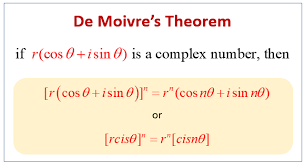
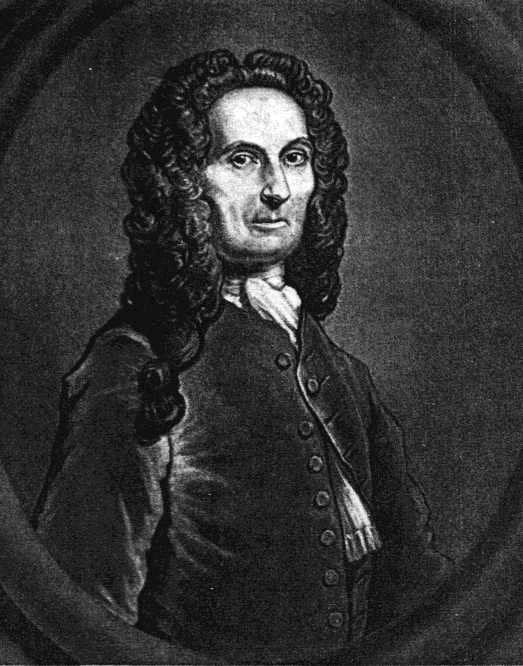
Abraham de Moivre derived the formula combining complex numbers and trigonometry in his works. Although he never called his theory “De Moivre’s Theorem”, the formula is named this way.
He derived his formula based on the works of derived his formula based on Francois Viete’s solution of Van Roomen’s Problem. The full derivation can be seen here:http://fermatslasttheorem.blogspot.com/2007/12/de-moivres-famous-formula.html
However, his results from this were quite ambiguous and it was not well understood until De Moivre himself discovered the roots of unity
2. Euclid’s Geometry
The first thing I learnt in MAAHL, which made me so confused HAHAHHA.
Alexandrian Greek mathematician Euclid is credited for this mathematical system which is found in one of his books. His postulates were created from speculations of axioms that seem logical and then deducing theorems from them. His conjectures have been mentioned by other mathematicians in the past but he was the first to explain these propositions in a logical way.
3. The Golden Ratio
A concept I heard of a lot but didn’t understand until SISMO.
It was first used by the Egyptians in the design of the Great Pyramids. After that, Greek sculpture Phidias (500 BC – 432 BC), mathematician Plato (circa 428 BC – 347 BC), and Euclid (365 BC – 300 BC), all studied this “phi”, applying them to their own studies. The first illustrations of the golden ratio was created by Leonardo Da Vinci.
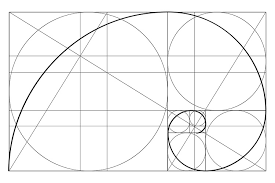
The term “Golden Ratio” was first coined by Martin Ohm (1792–1872). Nowadays, it is used widely and even appear as the determination of beauty in humans.
IB Learner Profile
Communicators: One of the most important thing throughout this whole shifting is communication. Talking to my parents, to Audrelia, to teachers, and also reading people’s thoughts online helped me express my concerns and thoughts. This allowed me to make the best decision at that time. Communicating also alleviated a lot of my stress, which would have been a pent-up frustration had I kept it to myself.
Principled: Despite doing considerably well in MAIHL, I knew that the high scores I was getting was because of Mr Rodel being nice. Moving into MAAHL, my scores are lower than they were in MAIHL, yet I feel better about myself. I also moved from the class on good terms with the teacher and I think this is particularly important as not suiting a teacher’s teaching style doesn’t make the teacher at fault.
Thinkers: I did a lot of thinking on whether I should move or not – more than I should. That aside, moving up the level meant that I had to put more effort in analysing the math questions that increased in difficulty as well. It was challenging but I enjoyed it.
Open-minded: I was sure that no one in my batch moved up a level. Most of the time, people from MAIHL moved to SL or people from other HL subjects moved to the SL. Then, here I come moving up the level. I was skeptical. But the various inputs from family and friends made me decide that I should give it a shot. I’m glad I did.
Risk-taker: Unquestionably, moving from MAIHL to MAAHL was a huge risk. I wouldn’t say I was a risk-taker to begin with – seeing how I cowardly stressed about it yet thought that Drel was crazy for suggesting the shift. Eventually, I took the risk though! 😀
Reflective: I often look back and see whether I have made the right decisions or not. So far, I think moving was a good decision. During one unit test in MAAHL, I couldn’t answer 1 question on trigonometry because I thought the formula wasn’t in the formula booklet. From that experience, I realise I should be more careful and perhaps next time – ASK if I’m unsure.
Inquirers: Time after time, difficult questions especially those that question mathematics. Like non-euclidean theories makes me confused and curious at the same time. I also often wonder what made them think of those theories in the first place.
Knowledgeable: I made myself knowledgeable on the expected math level taken for the application to medical school. I also looked into the things I had to catch up on before officially moving into the MAAHL class.
Caring: I wouldn’t say I’m the most caring person. However, I do care about my classmates and teachers even though it may not seem obvious. During SISMO, as I was selling the food together with Hyun A, I asked the committee if any of them wants to buy. This way I can set some aside before we run out.
Balanced: I think being in the MAAHL class made you balanced. We always study with a mix of theory and exploration so learning maths is much more enjoyable. There are times when the class is serious, but we also have lots of fun and laughter.
That’s the end of my long blog. People told me my previous blogs were really long and this one is longer ._. If you made it this far, I thank you for being patient and listening to my story!!! ❤
Resources
https://en.wikipedia.org/wiki/Euclidean_geometry
https://en.wikipedia.org/wiki/Abraham_de_Moivre
http://fermatslasttheorem.blogspot.com/2007/12/de-moivres-famous-formula.html
https://simple.wikipedia.org/wiki/Mathematics
https://www.sciencefocus.com/science/was-maths-invented-or-discovered/
http://www.goldennumber.net/golden-ratio-history/
https://www.scientificamerican.com/article/mandelbrot-set-1990-horgan/
https://www.encyclopedia.com/people/science-and-technology/mathematics-biographies/nicolas-bourbaki
 Helen's Blog ᕕ( ᐛ )ᕗ
You are the epitome of a risk-taker! And I’m glad you did. I am really happy to have you in MAAHL fam, and despite of your uncertainties – you are coping up well 🙂
Thank you for sharing us your journey from MAI to MAAHL. Great to see the glimpse of your experiences in MAI. Seems fun 🙂
Grateful for what Audrelsky’s convincing power that made you try to move to our MAAHL fam hehe!
Keep enhancing as you have great potentials.
Cheers to more awesome memories < 3
LikeLiked by 1 person
aww sir this made my day (இ﹏இ`。). Thank you for letting me move to your class!
LikeLike
KOK ADA MY FACE !!!!!!!
LikeLiked by 1 person
Cc cans (´∀`)♡
LikeLike